
Step 1: Get ready to donate
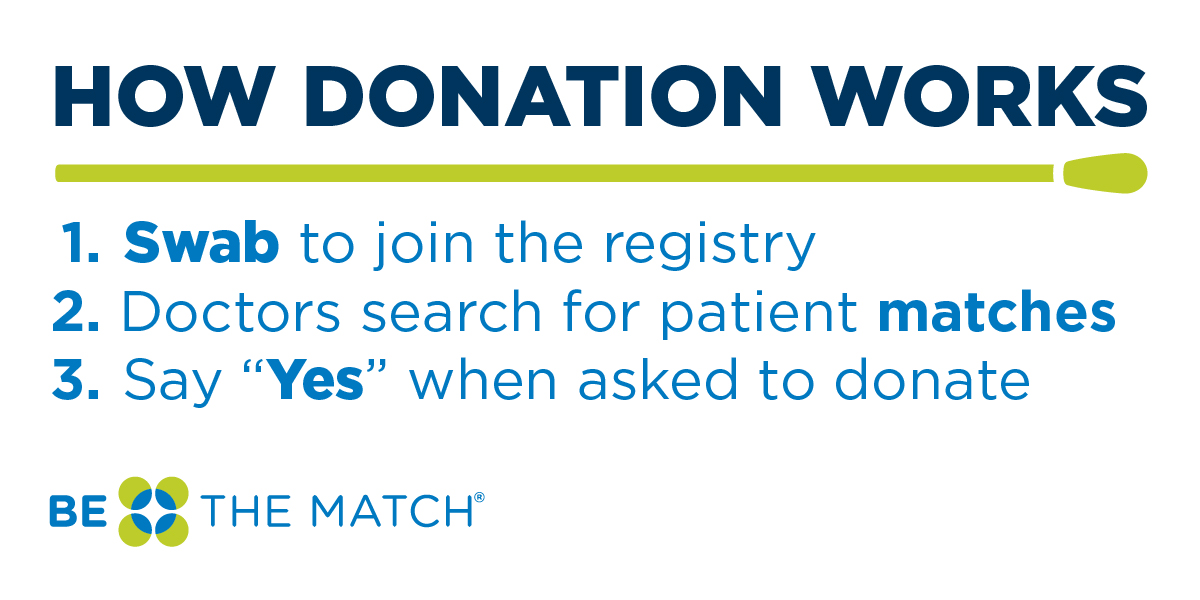
Once you join the NMDP Registry®, you will be included in patient searches every day. If you match a patient, you will be contacted to confirm that you are willing to donate. If you agree to move forward, you will be asked to update your health information and participate in additional testing to see if you are the best match for the patient. If you are the best match, you will:
- Participate in an information session. You will be given detailed information about the donation procedure and recovery process, including risks and side effects. If you agree to donate, you will sign a consent form.
- Have a physical exam and give blood samples to make sure that donation is safe for both you and the patient.
Step 2: Donate PBSC or bone marrow
There are two methods of donation: PBSC and bone marrow. The patient’s doctor will choose which one is best for the patient.
- PBSC donation is a non-surgical procedure. For 5 days leading up to donation, you will be given injections of filgrastim. Filgrastim is a medication that increases the number of blood-forming cells in your bloodstream. On the day of donation, blood is removed through a needle on one arm and passed through a machine that separates out the blood-forming cells. The remaining blood is returned to you through the other arm.
- Bone marrow donation is a surgical procedure that takes place in a hospital operating room. Doctors use needles to withdraw liquid marrow from the back of your pelvic bone. Donors receive anesthesia and feel no pain during the donation.
Step 3: Recovery and follow-up
The time it takes for a donor to recover varies. It depends on the person and type of donation. Most donors are able to return to work, school and other activities within 1 to 7 days after donation. NMDP® considers donor safety a top priority and will follow up with you regularly until you are able to resume normal activity.